


My Store
Medicinal Rollerball - 99.9 PURE DMSO infused with ORGANIC DRAGONSBLOOD - 70% DMSO INFUSION 30% DISTILLED WATER- 50ml SHIPS FREE
Medicinal Rollerball - 99.9 PURE DMSO infused with ORGANIC DRAGONSBLOOD - 70% DMSO INFUSION 30% DISTILLED WATER- 50ml SHIPS FREE
Couldn't load pickup availability
For more REAL and in-depth info on how this product can benefit you, visit our Instagram @beenefamilyfarm or our Facebook page, Lil Patch of Heaven. The info below is a generalized glimpse of this item, but there is so much more to our products that we cannot post here.
Glass bottle stainless steel roller ball plastic cap.
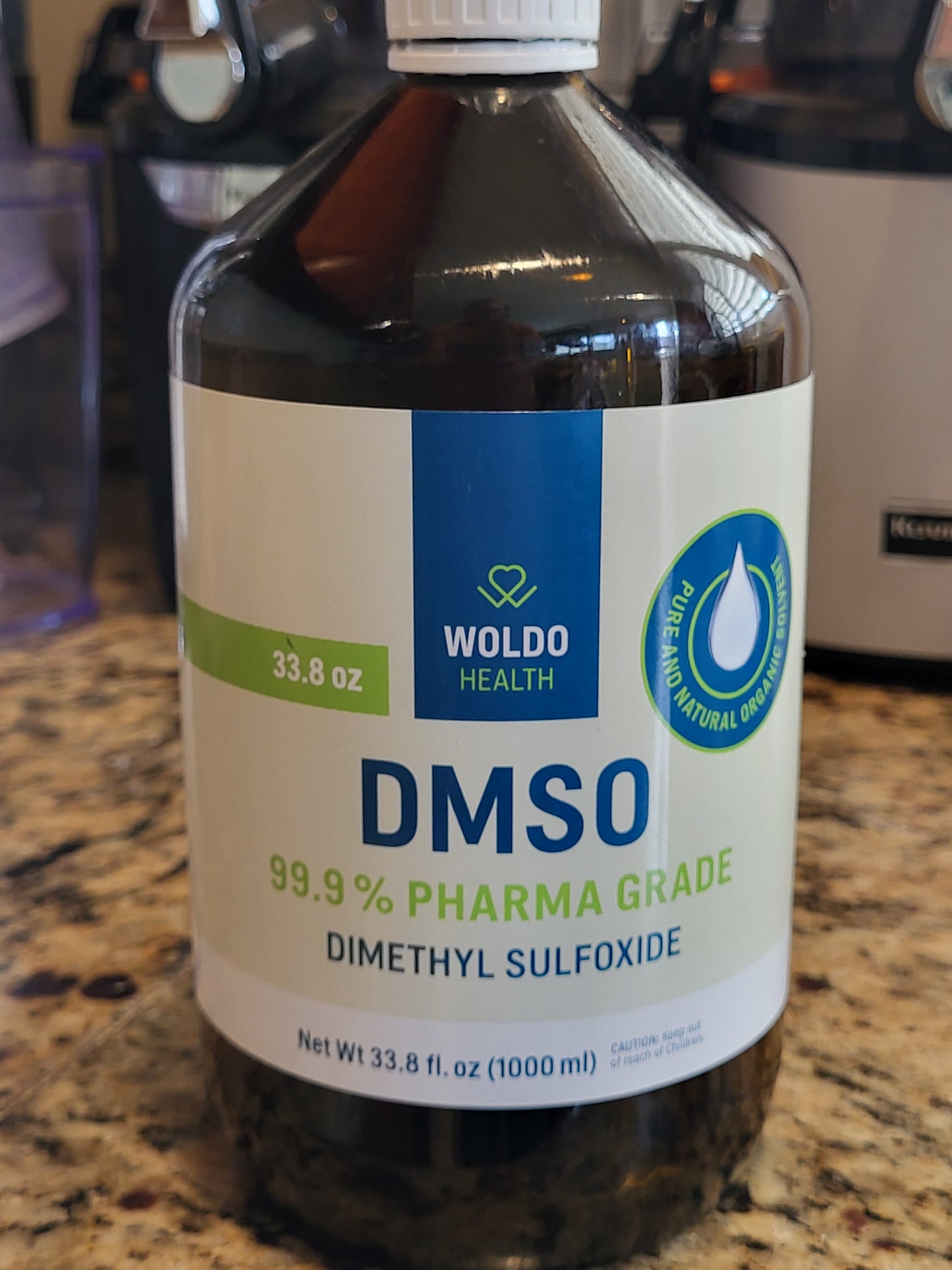
This is a 70% solution of 70% DMSO infused with dragon's blood and 30% distilled water
Dragon’s blood (a natural red tree resin) combined with DMSO (dimethyl sulfoxide) creates a powerful topical treatment used in alternative medicine. DMSO acts as a strong penetration enhancer and anti-inflammatory agent, which helps deliver the resin's wound-healing, antimicrobial, and pain-relieving compounds deep into the tissues
Key Medicinal Benefits & UsesWhile scientific studies on this specific combination are limited, both substances individually boast well-documented pharmacological properties that complement each other:Accelerated Wound Healing: Dragon's blood is traditionally used to stop bleeding, promote tissue regeneration, and form a protective "second skin". DMSO carries these restorative compounds into skin layers more effectively than water-based suspensions.Pain & Inflammation Relief: Both components act as natural analgesics and anti-inflammatory agents. The mixture is often utilized to relieve symptoms of osteoarthritis, muscle sprains, and joint pain.Antimicrobial Protection: Dragon's blood resin contains polyphenols that fight common pathogens, making this combination a frequent choice in alternative medicine for treating sores, insect bites, and herpetic lesions.
Ethnopharmacological relevance
Dragon׳s blood has been used as a famous traditional medicine since ancient times by many cultures. It is a deep red resin, obtained from more than 20 different species of four distinct genera. Red resin of Dracaena cochinchinensis S.C. Chen, known as Chinese Dragon׳s Blood or Yunnan Dragon׳s Blood, has been shown to promote blood circulation, alleviate inflammation, and to treat stomach ulcers, diarrhea, diabetes, and bleeding. This study investigated an effective approach to identify natural therapeutic agents for neurodegeneration from herbal medicine. The dichloride extract and isolated effective constituents of Chinese Dragon׳s Blood showed quinone oxidoreductase 1 (NQO1) inducing activity and anti-inflammatory effect significantly, which are therapy targets of various neurodegenerative diseases.
Materials and methods
Multiple chromatography and spectra analysis were utilized to afford effective constituents. Then Hepa 1c1c7 and BV-2 cells were employed to assay their NQO1 inducing and anti-inflammatory activities, respectively.
Results
Bioactivities guided isolation afforded 21 effective constituents, including two new polymers cochinchinenene E (1), cochinchinenene F (2) and a new steroid dracaenol C (16). The main constituent 3 (weight percent 0.2%), 5 (weight percent 0.017%), 4 (weight percent 0.009%), 9 (weight percent 0.094%), 10 (weight percent 0.017%) and 8 (weight percent 0.006%) are responsible for the anti-inflammatory activities of Chinese Dragon׳s Blood. While, new compounds 1, 2 and known compounds 5, 11 showed good NQO1 inducing activities. The brief feature of the activities and structures was discussed accordingly.
Conclusion
Overviewing the bioactivities and phytochemical study result, 4'-hydroxy-2,4-dimethoxydihydrochalcone (3) and pterostilbene (5) as effective constituents of Chinese Dragon׳s Blood, were found to be potential candidate therapeutic agents for neurodegenerative diseases.
Graphical abstract
To screen the novel natural therapeutic agents for neurodegenerative diseases, 21 effective constituents, including two new polymers (1, 2) and a new steroid (16), were identified from Chinese Dragon’s Blood. The main components 3 and 5 were targeted as potential therapeutic agents of neurodegenerative diseases.
. Introduction
Oxidative stress and excessive inflammatory responses in central nervous system (CNS) play critical roles in the pathogenesis of various neurodegenerative diseases such as stroke, Alzheimer׳s disease (AD), Parkinson׳s disease (PD), and Huntington׳s disease (HD), progressive multiple sclerosis (PMS), and amyotrophic lateral sclerosis (ALS) (Gibson and Zhang, 2001, Cho et al., 2012).
Oxidative stress reflects an imbalance between levels of reactive oxygen species (ROS) and cell׳s ability to scavenge the reactive radicals or to repair the resulted damages. Disturbances in normal redox state of cells can overproduce peroxides and oxygen free radicals that damage components of the cell, including proteins, lipids, and DNA (Menzies et al., 2002, Andersen, 2004, Halliwell, 2006, Barber and Shaw, 2010, Takuya et al., 2012). ROS can be scavenged by antioxidants and antioxidant enzymes, including quinone oxidoreductase 1 (NQO1). There is emerging evidence that NQO1 makes sense in neuroprotective mechanism against oxidative damage (Lee et al., 2012, Lim et al., 2008, Park et al., 2011). NQO1, which has been widely used as a biomarker for activities of phase II antioxidant enzyme, prevents free radical formation from quinone to redox-stable hydroquinone. It has also been shown to protect microglia from oxidative insult (Hwang, 2013, Kim et al., 2013). Therefore, it is a potential therapeutic target for various neurodegenerative diseases (Park et al., 2011).
Neuroinflammation is a critical defense mechanism against infectious agents and neuronal injuries in the CNS. However, excessive or sustained neuroinflammatory processes may result in neuronal damages, as observed in many neurodegenerative disorders (Takuya et al., 2012). In response to inflammatory signals, microglia cells, the resident macrophage-like immune cells produce various pro-inflammatory cytokines, including nitric oxide (NO), tumor necrosis factor α (TNF-α), and interleukin 1β (IL-1β), which contribute to progressive damage in the neurodegenerative diseases (Barger and Harmon, 1997; Saleppico et al., 1996). Prevention and mitigation of neurodegenerative diseases are still big challenges after decades of intensive anti-oxidative and anti-inflammatory therapies. New approaches are warranted to identify effective therapeutic agents from naturally occurring phytochemicals.
In our screening of natural herbal medicine for therapy of neurodegenerative diseases, the dichloride extract of Chinese Dragon׳s Blood was selected as a good candidate. Dragon׳s blood is a deep red resin, which has been used as a famous traditional medicine since ancient times by many cultures (Gupta et al., 2008). For example, locals of Moomy city on Socotra island used the Dragon’s blood (Dracaena) as a sort of cure-all, using it for things such as general wound healing, a coagulant, curing diarrhoea, lowering fevers, dysentery diseases, internal ulcers of mouth, throat, intestines and stomach, as an antiviral for respiratory and stomach viruses and for skin disorders such as eczema. It is also used for treating dysentery, diarrhoea, hemorrhage and external ulcers in Yemeni folk medicine (Gupta et al., 2008). Dragon’s Blood is obtained from more than 20 different species of four distinct genera Croton, Dracaena, Daemonorops, and Pterocarpus (Gupta et al., 2008, Xina et al., 2011). Red resin of Dracaena cochinchinensis S.C. Chen, known as Yunnan Dragon’s Blood or Chinese Dragon’s Blood has been shown to promote blood circulation, alleviate inflammation, and to treat stomach ulcers, diarrhea, diabetes, and bleeding (Zheng et al., 2006, Gupta et al., 2008, Xina et al., 2011, Yi et al., 2011). Based on the previous work (Li et al., 2012), here we want to clarify the therapeutic effect of Chinese Dragon’s Blood on neurodegenerative diseases and further identify active natural products responsible for the therapeutic effect of the resin.
Important Safety Precautions:
- External Use Only: Comfrey should never be ingested as it contains pyrrolizidine alkaloids.
- Application Risks: DMSO readily absorbs into the skin and may carry impurities with it; ensure the application area is clean. It can cause skin irritation or rashes.
Avoid in Pregnancy: Pregnant women should avoid using DMSO
How to Use:
Massage a small amount onto clean, dry skin as needed. For best results, use daily
Why Choose Us:
- 100% Natural Ingredients
- Free of Synthetic Fragrances and Preservatives
- Handcrafted in Small Batches
Note: For external use only. Conduct a patch test before first use, especially for sensitive skin.
Disclaimer: These statements have not been evaluated by the FDA and are not intended to diagnose, treat, or cure any disease. If you are considering making any changes to your lifestyle, diet, or skin care regimen, you should first consult your doctor or healthcare provider.
Prop65 Warning: This product can expose you to chemicals which are known to the State of California to cause cancer and birth defects or other reproductive harm.
For more information, go to www.P65Warnings.ca.gov.
Share


Love